
The conditions of Pokémon cards: from Mint to Poor
What Mint, Near Mint, Excellent, Good, Light Played, Played, and Poor mean, and the effect of condition on a card's price.
Updated on 29.09.2026 · 2 min read
BDPokéCards uses the same condition scale as Cardmarket, from Mint to Poor. Along with rarity, condition is what most affects a card's price.
The Seven Conditions
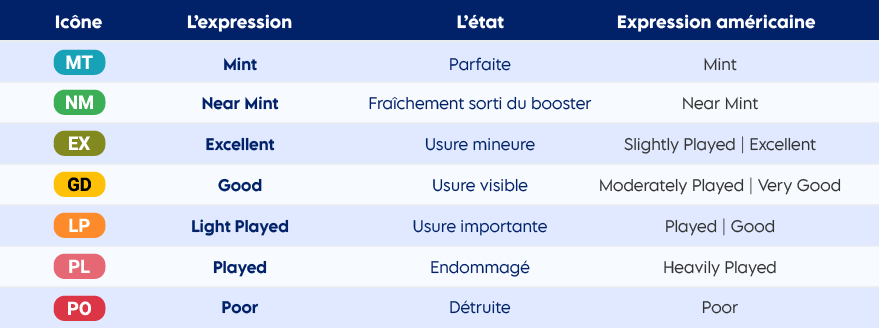
Mint (MT): perfect card, as if straight from the booster. No defects, even up close.
Near Mint (NM): almost perfect card. Up close, you might see a small defect, such as a white spot on an edge. This is the reference condition for pricing.
Excellent (EX): slightly used card. Some whitening on edges or corners, or light scratches.
Good (GD): visible wear. Whitened edges and corners, scratches on the surface. No creases.
Light Played (LP): heavily used card. Worn edges and corners, scratches, sometimes a slight crease. It can still be used in tournaments.
Played (PL): very worn or deformed card. Creases, damaged surface, rounded corners. It may no longer be accepted in tournaments, but remains intact and readable.
Poor (PO): very damaged card, unusable in tournaments. Tears, water stains, heavy creases, writing or modified card.
Evaluating a Card
- Look at the card under good lighting, tilting it to see scratches.
- Examine all four corners and edges, front and back. Whitening is most visible on the back.
- Hold the card against the light to spot creases.
- If in doubt, choose the lower condition. If the received condition does not match the listing, the buyer can report an issue from their order.
Condition and Price
A Near Mint card is worth its price guide. Below that, the price drops quickly. To suggest a price to sellers, BDPokéCards applies these percentages to the Near Mint price:
| Condition | Percentage of Near Mint Price |
|---|---|
| Mint | 105% |
| Near Mint | 100% |
| Excellent | 85% |
| Good | 70% |
| Light Played | 55% |
| Played | 40% |
| Poor | 25% |
These are guidelines. A highly sought-after card often sells for more, even if damaged.
Protecting Your Cards
Store your cards in sleeves, then in a toploader or binder. For shipping, place the protected card between two rigid pieces of cardboard.